Library13 books
The Library
The books I recommend.
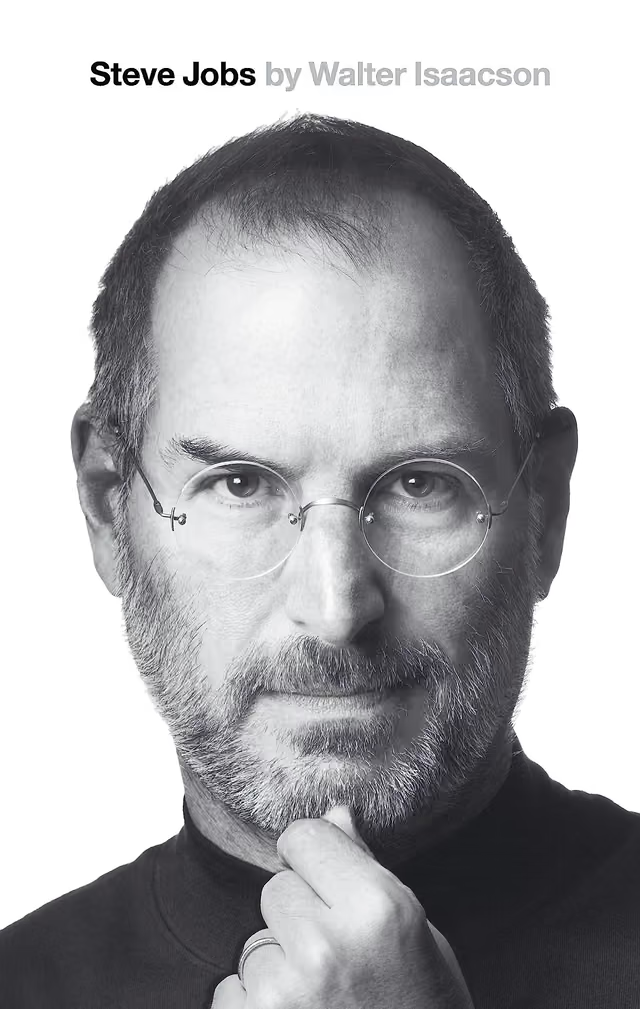
Steve Jobs
2011 · 649 pages
The authorised biography of Apple's co-founder, written from more than forty interviews with Jobs over two years and many more with his family, colleagues and rivals. Jobs asked for it and did not ask to read it first.
It runs from his adoption and his years at Reed College, through founding Apple with Steve Wozniak in 1976, the Macintosh, his removal from the company in 1985 and the NeXT and Pixar years, to his return in 1997 and the run of the iMac, iPod, iPhone and iPad. It was published weeks after his death in October 2011.
Isaacson does not flatter him. The same man who could make a team do what it believed was impossible could also be cruel to it, and the book lets both stand.
Key ideas
01
Focus is saying no
On his return Jobs cut Apple's sprawling product line down to four. Deciding what not to do mattered as much as deciding what to do.
02
Simplicity is earned
Simple products came from understanding a problem deeply enough to remove everything that was not essential, not from leaving work out.
03
Own the whole experience
Jobs insisted on controlling hardware, software and content together, so the product worked the way he intended from end to end.
04
Technology meets the humanities
He placed Apple where technology crosses the liberal arts, and treated taste and design as seriously as engineering.
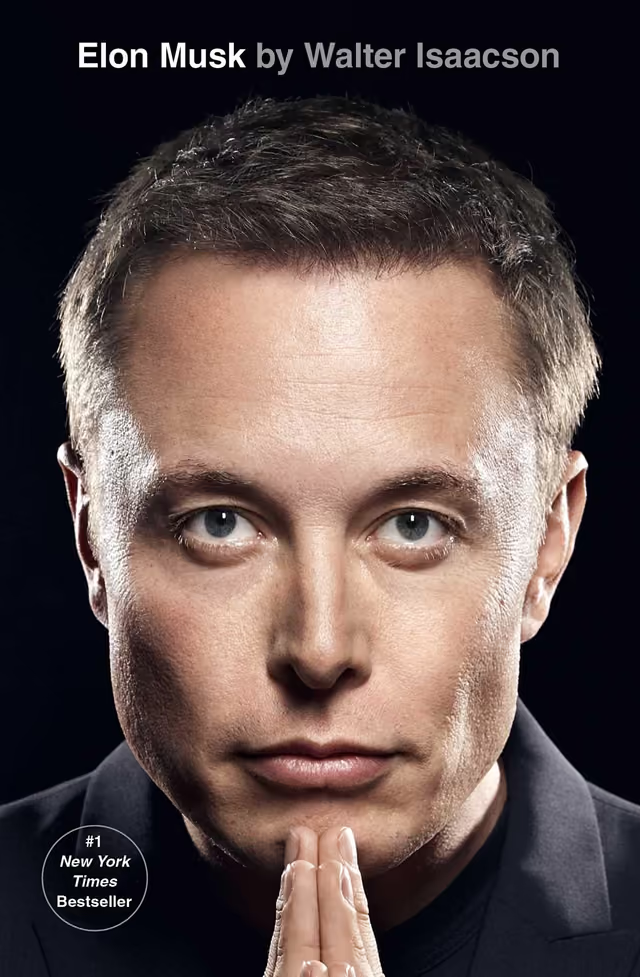
Elon Musk
2023 · 688 pages
Isaacson followed Musk for two years, sitting in on meetings, walking factories and interviewing him, his family and the people who work with and against him.
The book starts with a hard childhood in South Africa and a difficult relationship with his father, then follows Zip2 and PayPal, the near failures of SpaceX and Tesla in 2008, and the build of Starship, the Model 3 production push, Neuralink and the 2022 purchase of Twitter.
It is a portrait of a man with an extreme tolerance for risk and an appetite for urgency, and it is honest about what that costs the people around him.
Key ideas
01
The algorithm
Musk's rule for engineering: question every requirement, delete any part or process you can, simplify what is left, speed it up, and only then automate it. In that order.
02
A maniacal sense of urgency
He sets deadlines that look impossible on purpose, because a team aiming at an absurd date moves faster than one aiming at a comfortable one.
03
Physics as the limit
Cost and schedule are argued from first principles, what the materials and the physics allow, rather than from what things have cost before.
04
Go to the floor
Musk runs problems from the factory and the launch pad rather than the office, and expects the people who design a part to see it built.
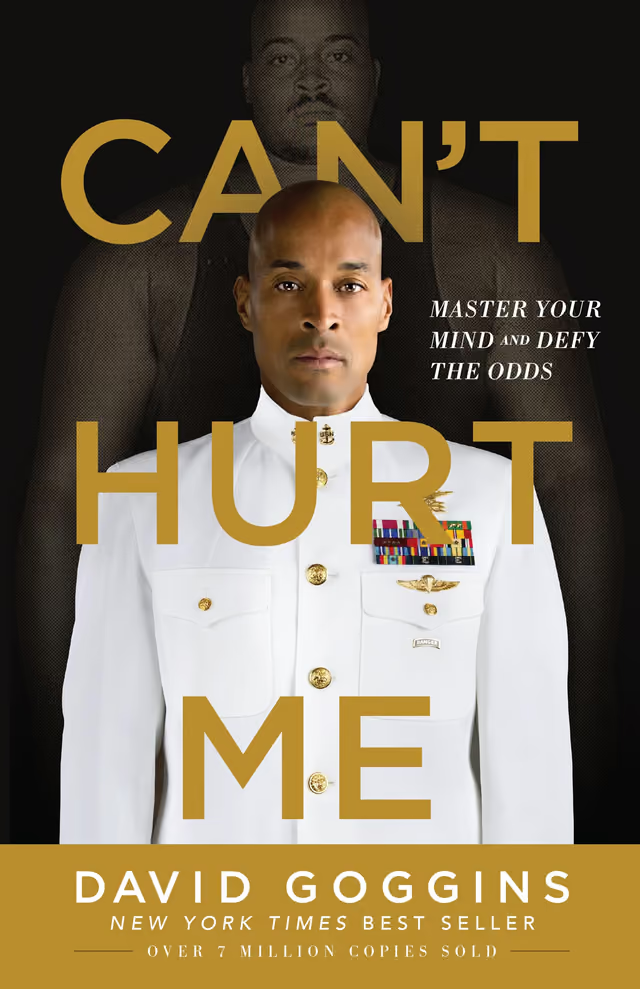
Can’t Hurt Me
2018 · 364 pages
David Goggins' memoir of turning a childhood of abuse, poverty and racism into a life built on deliberately choosing the hardest thing in front of him.
In his twenties he was nearly 300 pounds and spraying for pests on night shifts. He lost more than a hundred pounds in under three months to qualify for Navy SEAL training, went through Hell Week three times, graduated, and went on to Army Ranger School, ultramarathons including Badwater, and a Guinness world record for the most pull-ups in 24 hours, 4,030 of them done in about seventeen.
Every chapter ends with a challenge for the reader. The point is not his story. It is what the reader does next.
Key ideas
01
The 40% rule
When your mind says you are finished, Goggins argues you have used about forty percent of what you have. The rest is on the other side of the urge to stop.
02
The accountability mirror
Write your insecurities and goals on sticky notes on the mirror and face them every day, without excuses and without flattering yourself.
03
The cookie jar
Keep a mental record of every hard thing you have already survived, and reach into it when you need proof you can do the next one.
04
Callous the mind
Doing what you do not want to do, on purpose and often, toughens the mind the way repetition toughens a hand.
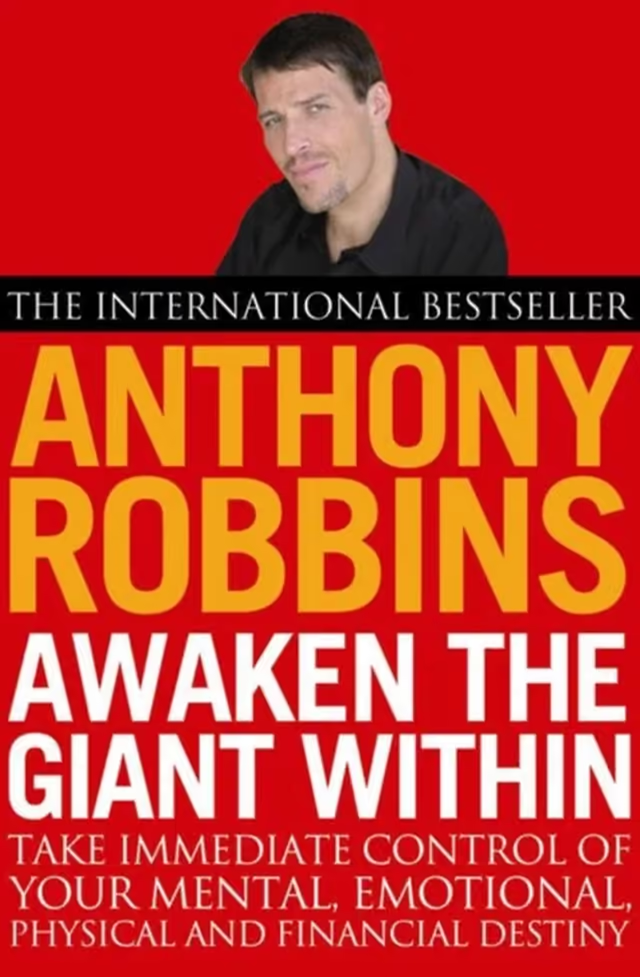
Awaken the Giant Within
1991 · 544 pages
Tony Robbins' manual for taking control of your emotions, body, relationships and money, built on the argument that the quality of a life comes down to the quality of the decisions made in it.
It works through what drives behaviour and how to change it: the beliefs you hold, the questions you ask yourself, the words you use for how you feel, and the values and rules that decide when you let yourself feel good.
Near its end is a practical programme, including a ten day mental challenge: refuse to dwell on negative thoughts for ten days straight.
Key ideas
01
Decisions shape destiny
A real decision cuts off every other option. Robbins argues that one committed decision changes more than years of good intentions.
02
Pain and pleasure
Everything we do is to avoid pain or gain pleasure. Change what you link pain and pleasure to, and the behaviour follows.
03
Better questions
Thinking is asking and answering questions. Ask better ones, what is great about this, what can I learn, and the answers change how you feel.
04
Constant improvement
Raise your standards and improve a little every day, in every area, without end. Robbins calls it CANI, constant and never ending improvement.
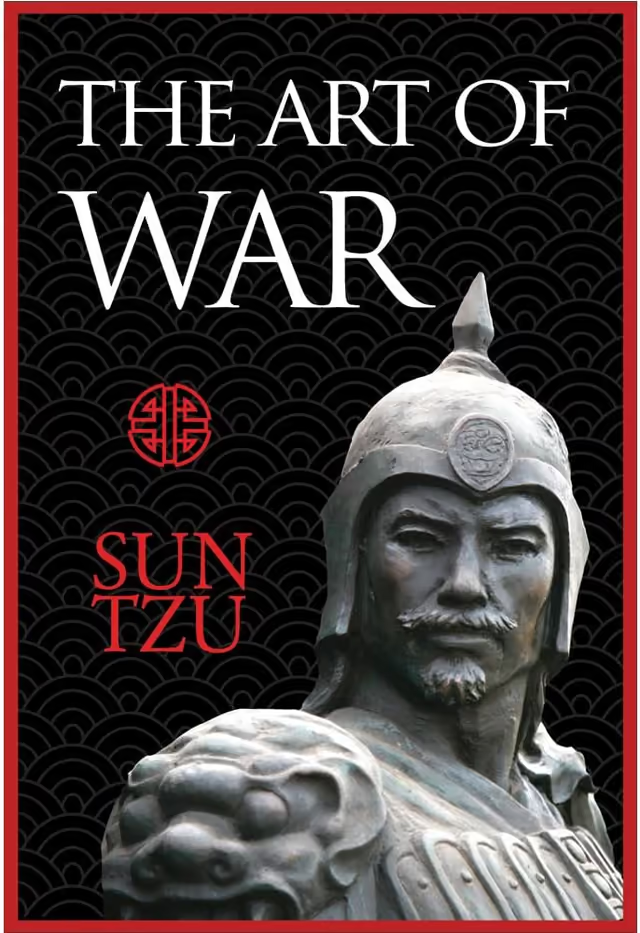
The Art of War
c. 500 BC · 72 pages
A Chinese treatise on strategy traditionally attributed to Sun Tzu, a general of the late sixth century BC, though the text as it survives is probably later. It is thirteen short chapters, and it is still read by soldiers, athletes and people who run companies.
It covers planning, the cost of war, attack by stratagem, positioning, energy, strengths and weaknesses, manoeuvre, terrain and the use of spies. Almost none of it is about fighting. Most of it is about what happens before a fight, and how to avoid one you would lose.
Key ideas
01
Win before the fight
The best victory is the one that needs no battle. A fight is decided by the preparation and position that came before it.
02
Know them, and yourself
Understand both the enemy and yourself and no number of battles should worry you. Know only one of the two and you win as often as you lose. Know neither and you lose every time.
03
All warfare is deception
Appear weak when strong and far when near. Never let the other side see exactly where you are or what you intend.
04
Strike where they are weak
Avoid what is strong and attack what is weak, the way water runs around rock and finds the low ground.
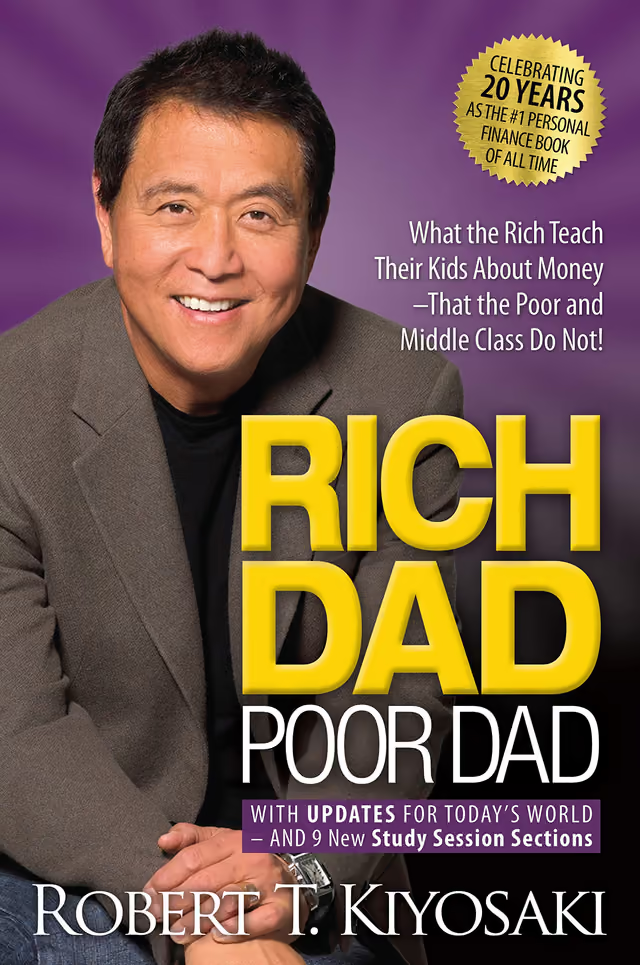
Rich Dad Poor Dad
1997 · 336 pages
Robert Kiyosaki grew up with two fathers: his own, highly educated and always short of money, and his best friend's father, who never finished eighth grade and became one of the richest men in Hawaii. The book sets their advice side by side.
His argument is that school teaches people to work for money and never teaches them how money works, and that the gap between the rich and everyone else is mostly financial literacy: what you buy, what you own, and who you work for.
Key ideas
01
Assets and liabilities
An asset puts money in your pocket. A liability takes it out. The rich buy assets; most people buy liabilities they believe are assets.
02
The rich do not work for money
Fear and desire keep most people in the rat race of a salary. The alternative is to make money work for you.
03
Mind your own business
Your job pays someone else. Your business is the column of assets you build and keep for yourself.
04
Work to learn
Choose work for the skills it teaches, selling, managing, investing, rather than only for what it pays.
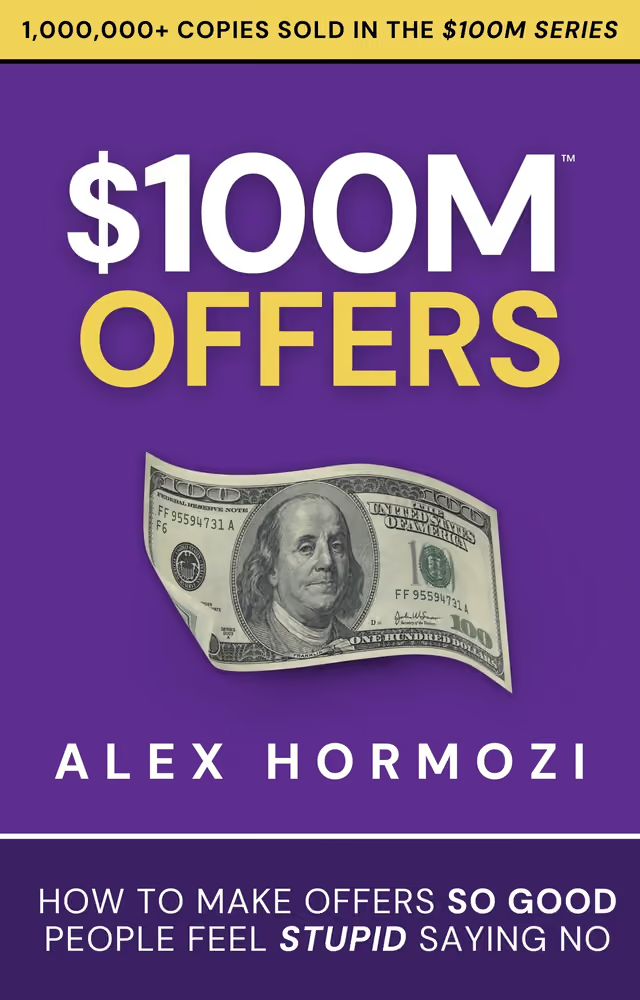
$100M Offers
2021 · 164 pages
The first book in Alex Hormozi's $100M series, on building an offer so good that people feel stupid saying no. He calls it a Grand Slam Offer.
It covers picking a market that is already desperate to buy, pricing high rather than competing on price, and then stacking the offer with bonuses, guarantees, scarcity, urgency and a good name, until the price looks small next to what is on the table.
Key ideas
01
The value equation
Value rises with the dream outcome and how likely the buyer believes it is, and falls with the time it takes and the effort and sacrifice it costs. Push the top up and the bottom towards zero.
02
Find a starving crowd
The market matters more than the offer. Pick people in real pain, who can pay, who are easy to reach, and whose number is growing.
03
Charge more
A higher price lets you deliver better, which gets better results, which lets you charge more again. Competing on price is a race to the bottom.
04
Make it unique
An offer nobody can compare like for like escapes being a commodity. Buyers cannot shop it on price because nothing else is the same.
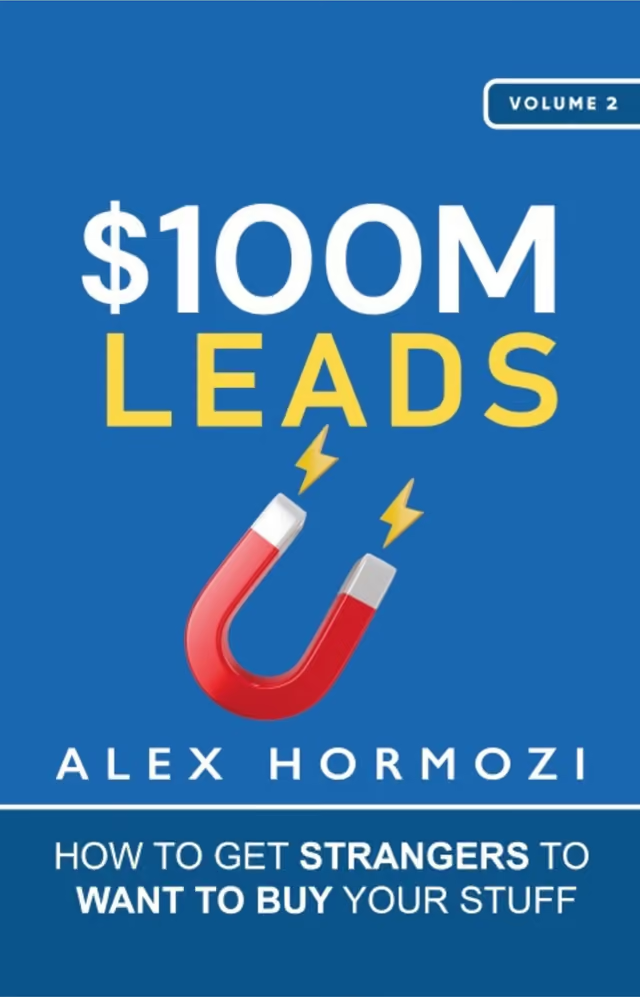
$100M Leads
2023 · 278 pages
The second book in the $100M series, on how to get strangers to want to buy your stuff. An offer only makes money if enough people see it.
It sets out four ways to let people know about you, then how to get other people to do the same for you, and how a lead magnet, something useful given away, turns attention into people who put their hand up.
Key ideas
01
The core four
There are only four ways to reach people: warm outreach to people who know you, free content, cold outreach, and paid ads. Everything else is a version of these.
02
Lead getters
Past the core four, other people get leads for you: customers who refer, employees, agencies and affiliates.
03
The lead magnet
Give away something that solves a narrow problem completely and reveals the next one, which is the one you sell the answer to.
04
Rule of 100
Do a hundred primary actions a day, such as a hundred reach outs, a hundred minutes of content or a hundred dollars of ads, every day for a hundred days.
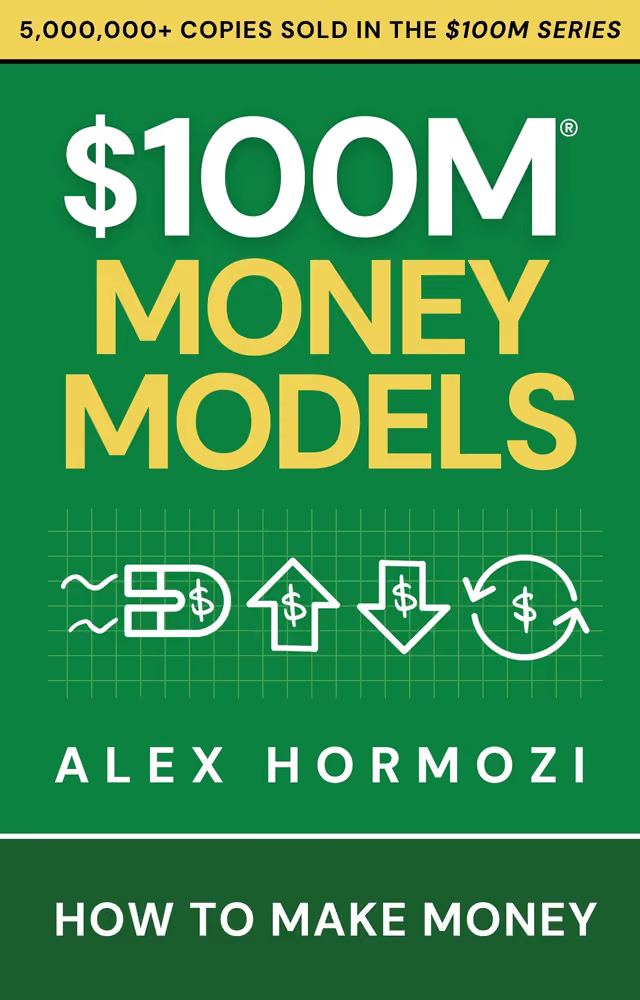
$100M Money Models
2025 · 190 pages
The third book in the $100M series, on how to make money: not from one offer, but from the sequence of offers a customer is shown.
Its argument is that a business which makes more gross profit from a new customer in the first thirty days than it cost to get and serve them, ideally twice as much, can grow as fast as it likes, because each customer pays for the next.
Key ideas
01
Attraction offers
The first offer exists to bring customers in, and it is designed so it can pay for itself.
02
Upsell offers
Right after someone buys, offer the next thing they need. It is when they want it most.
03
Downsell offers
When someone says no, offer a smaller, cheaper or paid over time version rather than losing them.
04
Continuity offers
Something they keep paying for, month after month, so the value of a customer keeps growing after the first sale.
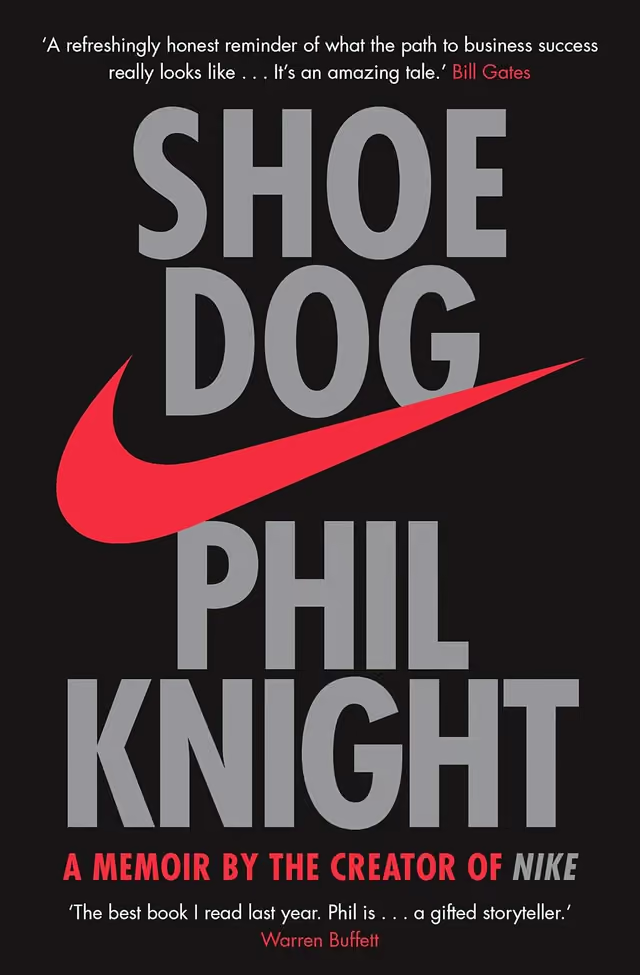
Shoe Dog
2016 · 400 pages
Phil Knight's memoir of building Nike, told year by year from 1962, when he set out with what he calls a crazy idea, to the company's public listing in December 1980.
He persuades Onitsuka, the Japanese maker of Tiger running shoes, to let him sell them in America, and starts Blue Ribbon Sports with his old running coach Bill Bowerman. When Onitsuka turns on him and sues, Blue Ribbon, by then selling its own shoes under the name Nike, wins.
Key ideas
01
A crazy idea
It starts with one conviction from his business school years: that Japanese running shoes could take on the German brands that owned the sport.
02
Growth eats cash
For most of the book the company sells more than it can afford to make, and Knight is always one bad month from running out of money.
03
The coach as designer
Bowerman kept taking shoes apart to make his runners faster, and the company's early designs came out of that tinkering rather than a lab.
04
Nobody does it alone
Knight is candid that Nike was built by a small band of unlikely people who believed in it, and the book is as much their story as his.
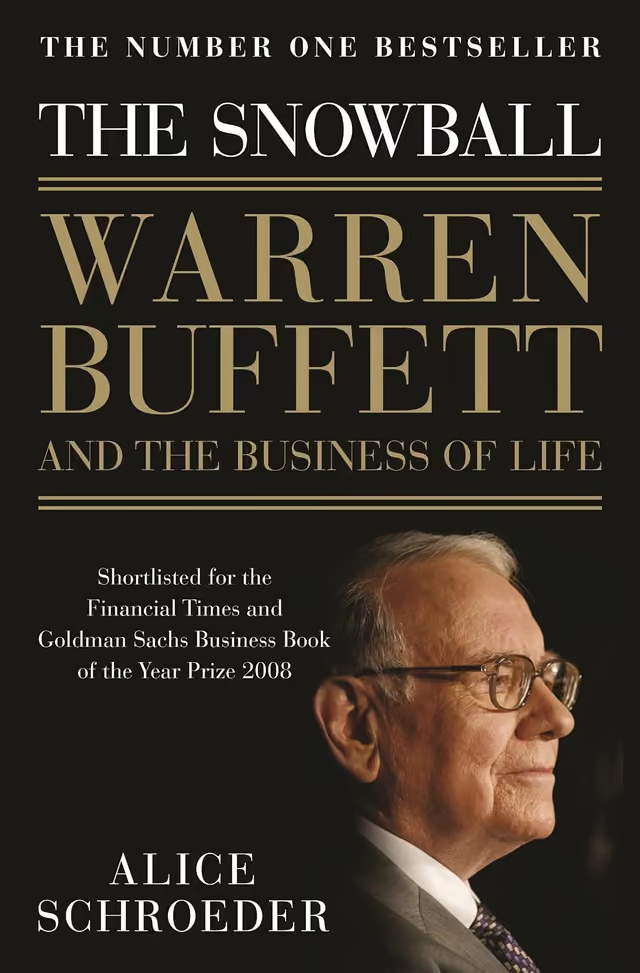
The Snowball
2008 · 832 pages
The authorised biography of Warren Buffett. He turned down other biographers and asked Alice Schroeder, then an analyst at Morgan Stanley, to write it, and gave her more than two thousand hours of his files and his time.
It follows him from boyhood in Omaha through building Berkshire Hathaway, his failed bid to take over Long Term Capital Management, the death of his wife Susie and the first months of the 2008 credit crisis. Where accounts of an event differed, Buffett told her to use the less flattering one.
Key ideas
01
Wet snow, long hill
The title is his line on compounding: life is a snowball, and what matters is finding wet snow and a really long hill.
02
The inner scorecard
Judge yourself by your own standards, not by what the world thinks of you. The question is whether you would rather be the best and thought the worst, or the reverse.
03
Tell it straight
A subject who asks for the unflattering version is rare, and it is why the book reads as a life rather than a legend.
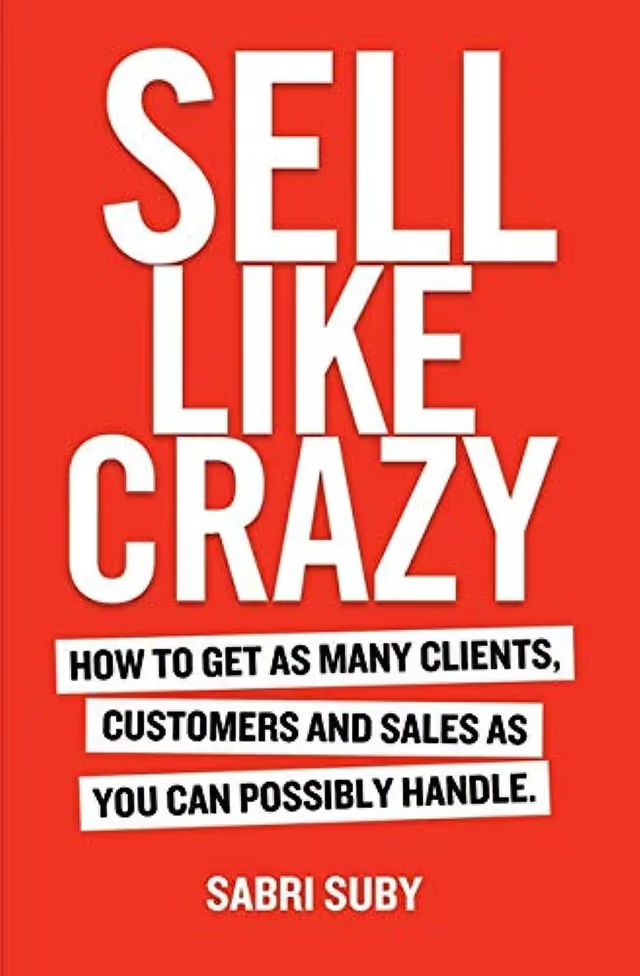
Sell Like Crazy
2019 · 352 pages
A sales and marketing playbook from Sabri Suby, founder of the Melbourne agency King Kong, on getting as many clients, customers and sales as you can handle.
It lays out his system in phases, from knowing exactly who you are selling to, through baiting and capturing leads, to making an offer and converting the people it brings in. The book says the system has produced more than four hundred million dollars in sales across 167 industries.
Key ideas
01
The Dream Buyer
Build a detailed picture of the one customer you most want, what they fear, want and read, before writing a word of marketing.
02
Bait before the sale
Lead with something genuinely useful given away free, which he calls a high value content offer, to start a relationship with people who are not ready to buy.
03
The Godfather Offer
Make an offer so strong it would be unreasonable to refuse, so the sale does not rest on persuasion.
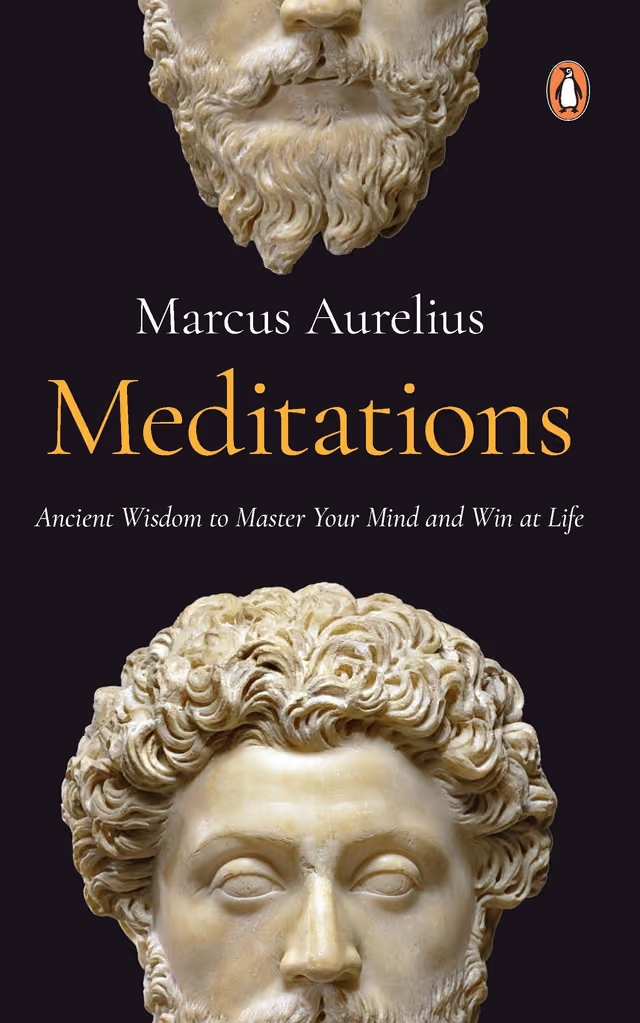
Meditations
c. 170 to 180 AD · 196 pages
The private notebook of a Roman emperor, written in Greek to himself and, as far as anyone can tell, never meant to be read by anyone else. It had no title of its own; the name came later.
Its twelve books were written in the last decade of his life, some of it on campaign on the Danube frontier. They are reminders, not arguments: how to act well, what to care about, and what to let go.
Key ideas
01
What is in your power
Your judgements and actions are yours. Almost everything else, fame, wealth, what others do, is not, and is not worth your peace.
02
Everything is for a day
The one who remembers and the one remembered both pass. Keeping that in view shrinks most worries to their real size.
03
An ordered whole
The world runs on reason, and you are part of it. Living by nature means living by that reason, and working with others rather than against them.
04
Reason over reaction
Disturbance comes from the view you take of a thing, not the thing itself. Change the view and the disturbance goes.